
My role
Director, Product Design
Sep 2023 — Current
My Team
4 designers · 2 researchers
Reporting to the CPO, I led Product Design and User Research for a completely new commodities pricing and market intelligence platform, spanning forecasting, cost modelling, dashboards and AI-powered tools.

92% of users migrated
within 18 months of migration starting, with half closing down access to legacy products.
Key accounts renewing with zero churn
versus significant churn on the legacy platforms.
Expana usage surpassed active legacy usage
around 14 months after migration began.
These are some of the principles I used to guide the design team as we replaced several established products with a completely new platform — balancing customer needs, legacy complexity and opportunities to improve the experience.
01.
Learn from the legacy products
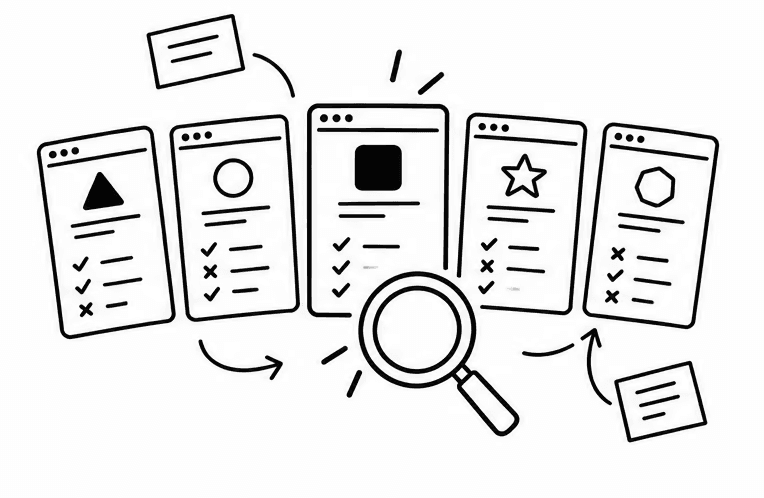
This step in our design process helped us mine years' worth of hard-won learnings from our legacy products. It broke down into a set of repeatable steps:
1
Customers
How do they use it, and what problem does it solve?

2
Internal experts
eg. Customer Success, Commerical, Data and Marketing
Why does it work this way, and what have we learned supporting it?
3
Analytics
Does behaviour match what we're hearing?

4
Market
How are others solving the same problem?
02.
Invest design effort where it matters
With a small team rebuilding a mature product, I prioritised design and research effort by considering how well our legacy solutions solved the core problem.
Light refresh
We do a great job solving this problem today.
Our legacy solution is a pain point for users, or there is an opportunity to deliver greater impact by rethinking the approach.
Another way of thinking of this balance is the trade off between innovation and familiarity:
Familiarity
Innovation
Push too far and we risked disrupting established customer workflows; stay too close to the legacy product and we limited how much we could improve it.
03.
Value parity, not feature parity
We didn't want to rebuild every feature from every legacy product. Instead, we focused on the value customers were getting from them, consolidating overlapping features into simpler experiences and using those needs to help shape the roadmap..


Cost Models, Price Change Reports, Watchlists and Data Builders were very different features…

…but we found some customers were using them to solve the same narrow set of problems, allowing us to migrate a large cohort with one powerful data table.
04.
Not all feedback is equal
Migration generated a lot of feedback, but requests for the old experience didn’t always signal an unmet need. The challenge was building confidence internally that not everything required an immediate response.

05.
Expect hidden complexity
Years of edge cases, workflows and business rules often only surfaced as we got deeper into the design. We learned (sometimes the hard way) to expect hidden complexity and leave room for what we didn't yet know.


Showing price history comes with layers of complexity. How should different price precisions be rounded? How do we compare series with different currencies, units or reporting frequencies? What happens when data is missing, revised or discontinued?